
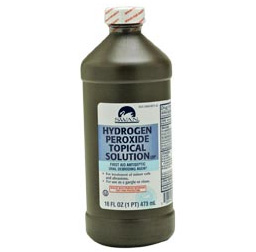
Hydrogen Peroxide
Hydrogen Peroxide is simply a water molecule (H20) with one extra oxygen molecule. Hydrogen peroxide is one of the most powerful oxidizers known - stronger than chlorine, chlorine dioxide, and potassium permanganate.
Link to vitiligo: High hydrogen peroxide have been shown to cause depigmentation of skin in several studies [1] and increased sensitivity to external hydrogen peroxide(H2O2) was observed in normal pigment cells under in vitro conditions.[2]
Uses: H2O2 is used as an antiseptic, mouthwash, hair dye, bleach, plant care agent and sterilizer
Retinoic acid
Description: Retinoic acid is the oxidized form of Vitamin A. It comes as a topically applied cream and can reduce the appearance of lines and wrinkles.
In the epidermis it thins the outer later, or stratum corneum, which makes the skin more permeable. However the overall thickness of the epidermis is increased. The epidermal cells are also more active. The production of collagen in the dermis is increased.
The most common problems are redness and sensitivity to the sun but serious complications are rare. If Retin-A is used repeatedly there is a risk of loss of pigment or lightning of the skin. Some patients say that the irritation is painful but scarring does not occur.
Link to vitiligo: there have been cases where usage of retinoic acid has triggered the onset of vitiligo.
Uses: Beauty products
Benzoyl peroxide
Description: Benzoyl peroxide is the active ingredient in acne products like Clerasil and ProActiv. The main mechanism of action of benzoyl peroxide depends on the release of oxygen free-radicals, which are capable of oxidizing bacterial proteins. However, this same mechanism can also damage melanocytes in people with skin depigmentation.
Link to vitiligo: there have been cases where usage of retinoic acid has triggered the onset of vitiligo.
Uses: Acne products
Hydroquinone
Description: Hydroquinone Cream is a skin-bleaching agent. Hydroquinone works by decreasing the
production and increasing the breakdown of melanosomes (melanin pigment granules) in the skin's pigment cells (melanocytes). It does this by inhibiting the activity of tyrosinase, the enzyme needed to make melanin.
According to the FDA, approximately 65 companies sell over 200 different types of skin-lightening products containing hydroquinone in the U.S. Currently, products that contain up to 2 percent hydroquinone may be sold in the U.S. without a prescription, and prescription skin-lightening products may contain up to 4 percent hydroquinone. Examples of prescription products containing hydroquinone are Lustra, Tri-Luma, and EpiQuin Micro.
Link to vitiligo: In extensive vitiligo, hydroquinone is used to kill the remaining pigment cells, leaving the entire body fair.
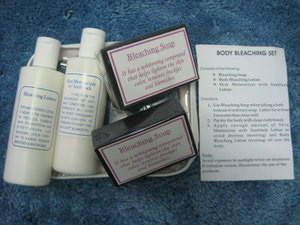
Uses: skin bleaching, photography
Trichloroacetic acid
Description: Solutions containing trichloroacetic acid as an ingredient are used for cosmetic treatments such as chemical peels and tattoo removal and the treatment of warts, including genital warts. It can kill normal cells as well.
Link to vitiligo: there have been cases where usage of trichloroacetic acid has triggered the onset of vitiligo.
Uses: chemical peels, tattoo removal
Fairness creams
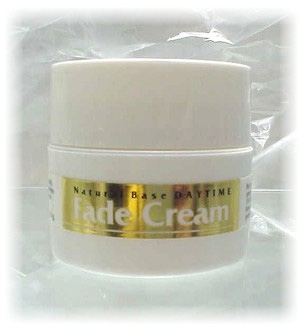
Description: Most fairness creams contain a bleaching agent. In persons with vitiligo, the bleaching agent can trigger the onset of vitiligo. Fairness creams can block sun rays and prevent secretion of Melanin, which gives the dark colour to the skin. So in effect fairness cream reduce tan, prevent the skin from getting darker by reducing melanin secretion. India & Pakistan are the the largest market for such products.
Link to vitiligo: there have been cases where use of fairness creams has triggered the onset of vitiligo.
Uses: cosmetic
[1]
Perturbed 6-Tetrahydrobiopterin Recycling via Decreased Dihydropteridine Reductase in Vitiligo: More Evidence for H2O2 Stress
Sybille Hasse, Nicholas C J Gibbons, Hartmut Rokos, Lee K Marles, Karin U Schallreuter. The Journal of Investigative Dermatology. London: Feb 2004. Vol. 122, Iss. 2; p. 307
To date there is ample evidence that patients with vitiligo accumulate millimolar concentrations of hydrogen peroxide (H2O2) in their epidermis as well as in their blood lymphocytes/monocytes. Several enzymes are affected by this H2O2 including catalase, glutathione peroxidase, and 4a-carbinolamine dehydratase.
[...]
Taken together, these new data add more evidence to a systemic involvement of H2O2 in the pathomechanism of vitiligo.
[2]Yohn JJ, Norris DA, Yrastorza DG, Buno IJ, Leff JA, Hake SS, et al. Disparate antioxidant enzyme activities in cultured human cutaneous fibroblasts, keratinocytes, and melanocytes. The Journal of investigative dermatology. 1991 Sep;97(3):405-9.